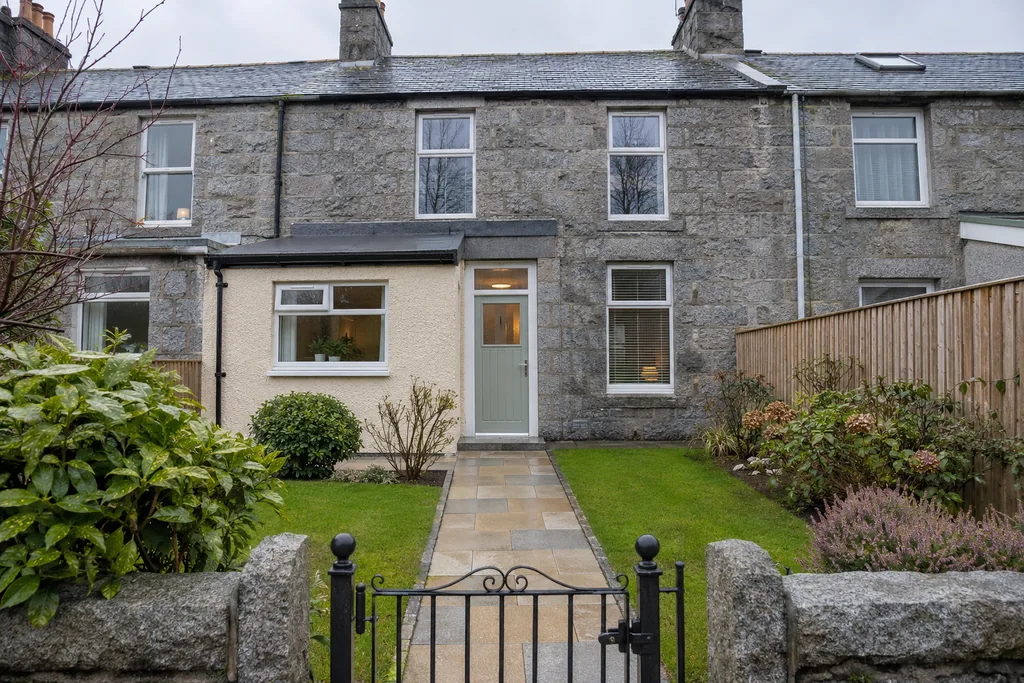
Garden paths
in Aberdeen
A path that is wide, firm and dry, with steps you can trust in the dark.
- Wide enough for a bin or buggy
- Grip in wet weather and frost
- Call now, or send a short form
How wide, how firm, how steep
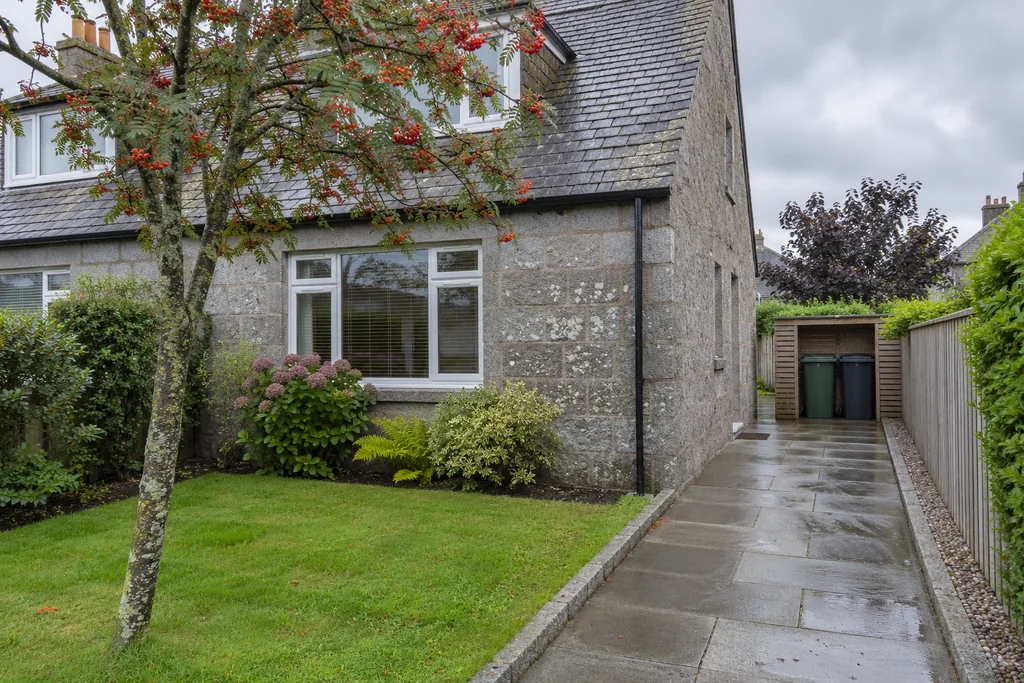
A path is used every day. Too narrow and you walk on the grass; too slick and you notice in January. We settle three things first.
Surface for grip
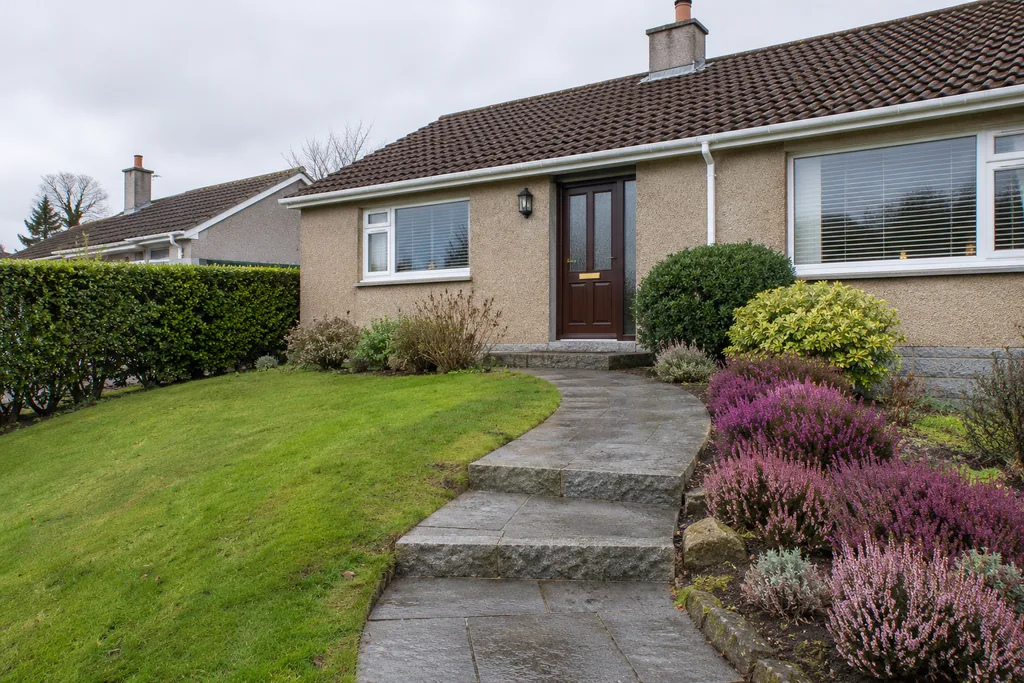
A smooth, polished face looks fine and goes slippery under moss or ice. We steer clear of it for paths and steps. Textured porcelain, riven sandstone and block paving all give a better grip.
See porcelain, sandstone and granite and block paving for the material choices.
Steps and sloping ground
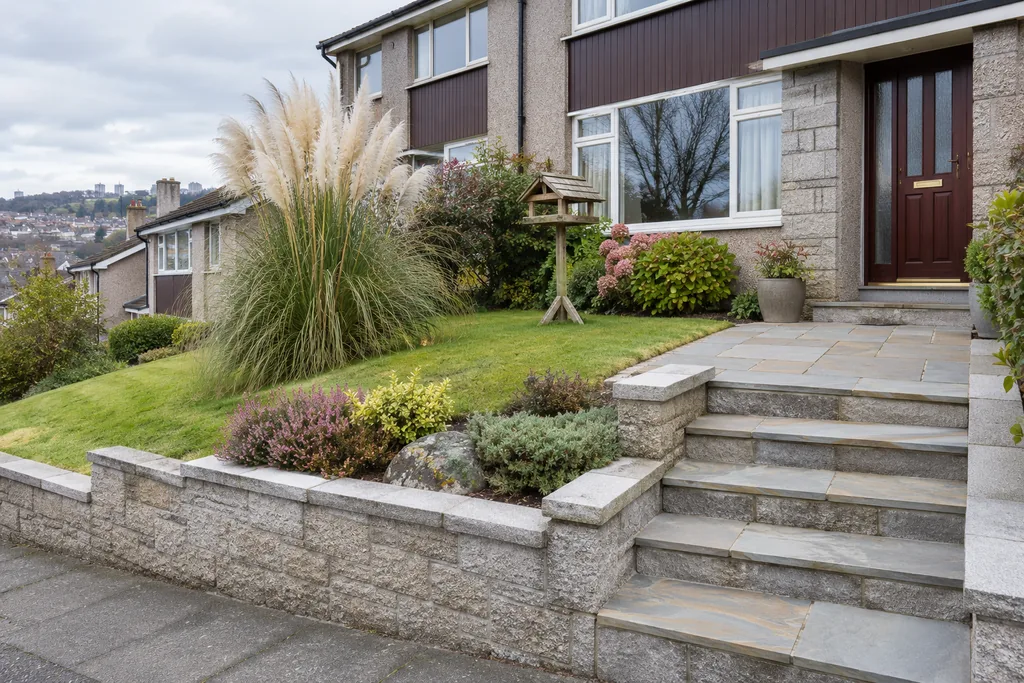
Plenty of Aberdeen front gardens climb from the pavement to the door. Steps should be even, with the same rise each time and a landing between flights. A steep or uneven flight has to come up again, so we mark the levels on the ground before we dig.
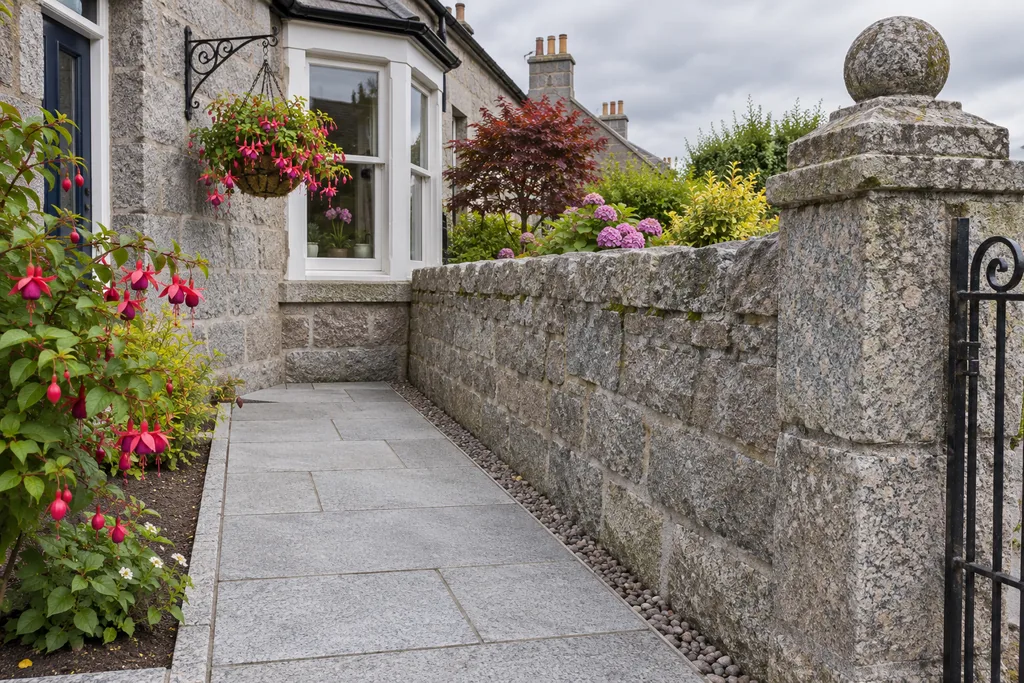
Paths beside granite walls and gates
Many Aberdeen gardens have a granite boundary wall, a stone step or an old gatepost. We match the path to what is already there, and leave a gap between the new paving and the wall base so water can drain.
Path questions
What is the best surface for a path that frosts over?
A textured one. Riven sandstone, textured porcelain and block paving all grip better than smooth, polished slabs.
How wide does a path need to be?
Wide enough to carry a bin and a bag of shopping at once. We would measure it on site.
Can you put steps into a sloping front garden?
Yes. We mark out the rises, build a firm base and add a landing before the first step.
Do I need permission for a path in front of my house?
Usually not for a path alone. But a surface facing the road, or a house in a conservation area, can change that (mygov.scot, updated 18 November 2025). Ask Aberdeen City Council or Aberdeenshire Council.
Can you widen an old path?
Often. We cut back to firm ground, add base stone and tie the new edge to the old one.
How do I ask about a path?
Ring 01224 927157 or use the form with your postcode.