PavingAberdeen
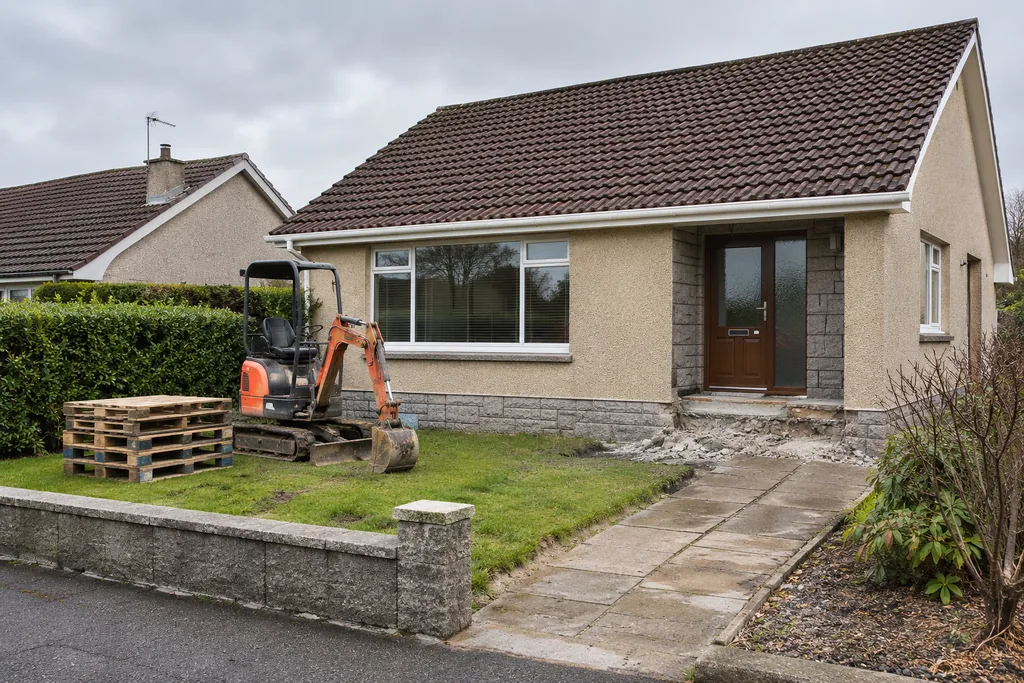
1970s detached house on the western side of Aberdeen with small digger and stacked pallets on the front lawn, old concrete stripped back at the door.
1970s detached house on the western side of Aberdeen, small digger and stacked pallets on the front lawn

Paving installation
in Aberdeen

Here is the order of work, from the first phone call to the last brush.

  • Site visit, quote and plan
  • Dig, base, fall and edge
  • Clear-up before we leave
  • A visit to look at the plot
  • Dig and base before the surface
  • Laid to a fall, edges fixed
  • Swept and cleared before we leave
  • Call now to talk it through
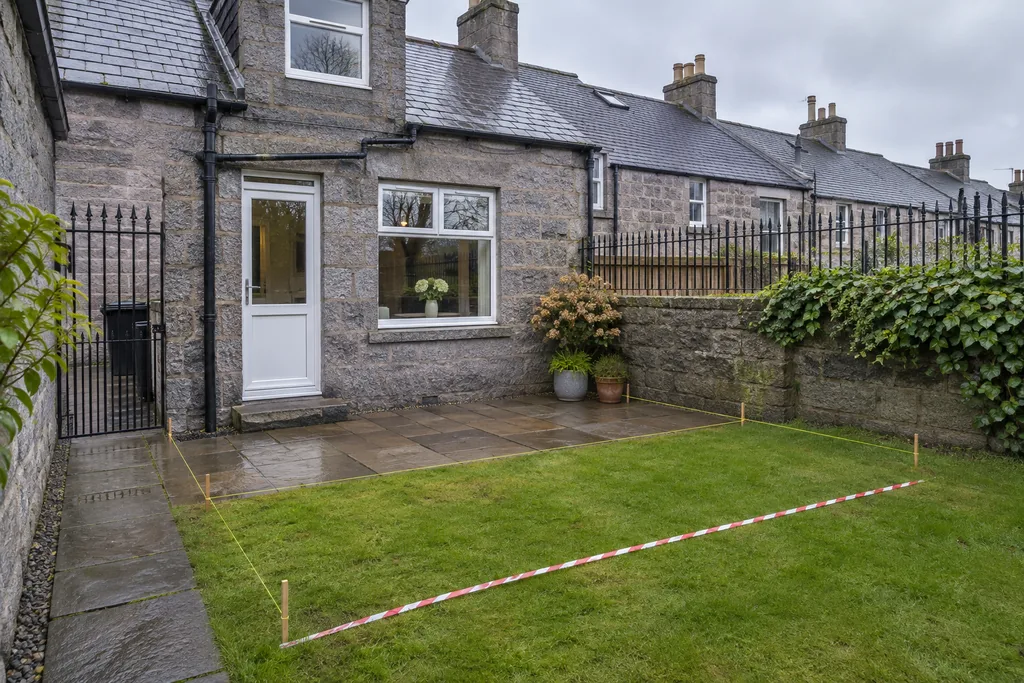
Granite terrace back garden in Aberdeen with string lines pegged along a planned patio edge, tape across the lawn.

Before we dig

We look at the plot, agree the job and mark it out.

  1. Talk it through. You ring with your postcode.
  2. Look at the plot. Size, levels, soil, access.
  3. Check the rules. We point you to the right council.
  4. Agree the plan. Surface, edges, falls, start date.
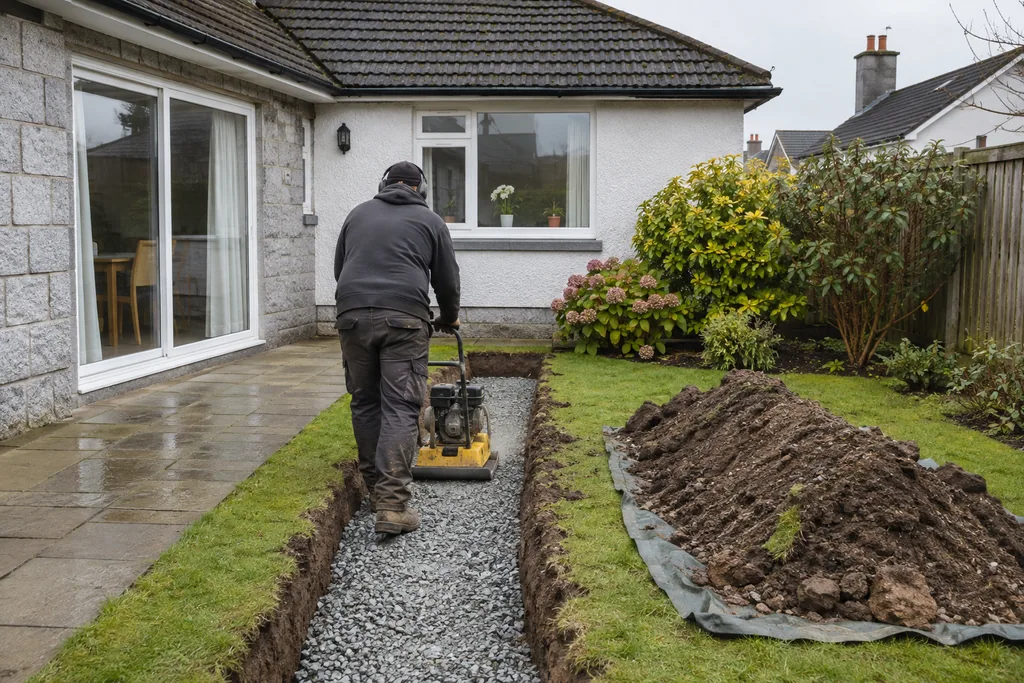
Bungalow rear garden in Aberdeen with trench with hard stone being pressed down by a plate compactor, soil heap aside.

The dig and the base

Everything soft comes out, down to ground that does not give. Hard stone goes back in layers, each pressed down before the next, and a thick, well-packed base keeps a surface flat through freeze and thaw. Where the ground is wet, we add depth.
  • Dug to firm ground, spoil moved off the plot
  • Stone laid and pressed in layers
  • Final height checked against the damp-proof course
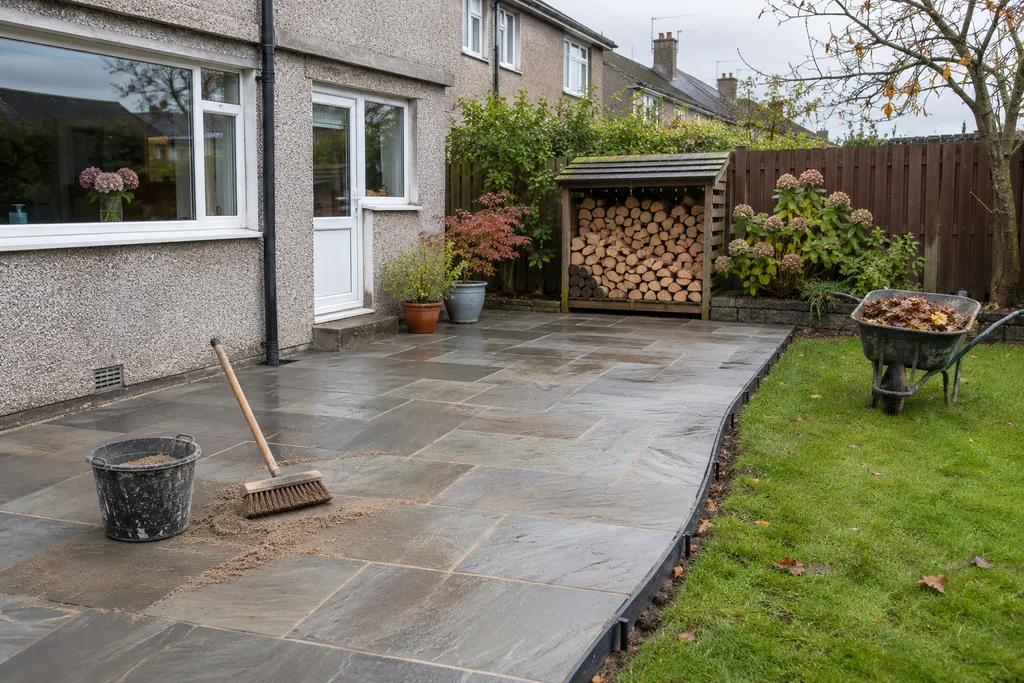
Back garden of a 1960s semi with slabs laid, joints being brushed full, an edge restraint fixed along the lawn.

Laying, jointing and finishing

The surface goes on last. Slabs are set on a bed and tapped to level, with a fall away from the walls. Blocks are laid in the chosen pattern, cut at the edges and pressed down. Joints are filled and the edge restraint fixed so nothing can creep.
  • Slabs or blocks laid to the agreed pattern
  • Edges fixed and joints filled
  • The site swept clear, then a walk round with you
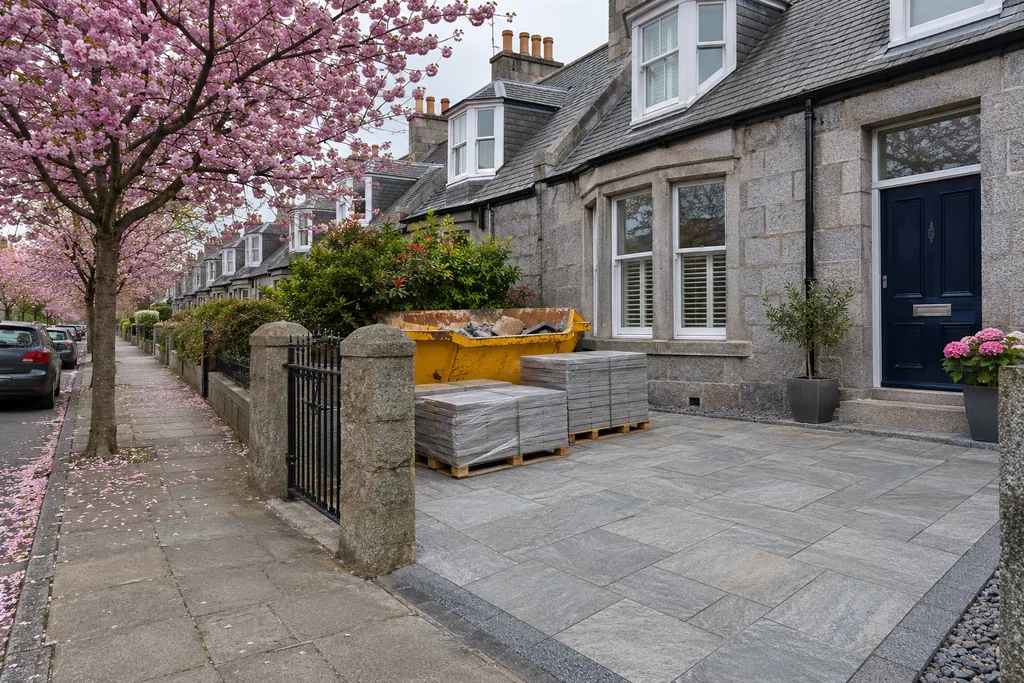
Terraced street with skip and pallets of paving stacked neatly by a front gate, pavement kept clear.

Weather, noise and the neighbours

Hard frost, a long downpour or strong wind can stop work, because bedding must set and slabs need dry material. We would rather leave a gap than lay on a bad day.

On a terrace or a close we also think about the neighbours: where the skip and the pallets go, and the hours the plate compactor runs.

Installation questions

How long will a patio take?

That turns on the size, the slope and the weather. We give a figure once we have seen the plot.

Will you take away the old surface?

Ring and ask.

Do I need to be at home?

It helps on day one, to agree levels and edges. After that you can come and go.

Who deals with the dropped kerb or road permit?

The council's roads team decides, and the owner normally applies.

What happens if it rains?

We stop when it would harm the work and pick up when the weather allows.

How do I start?

Phone 01224 927157, or put your postcode in the short form.

Ask about your job

Tell us what you want paved and when.

Starred boxes are compulsory. A phone number and postcode let us pin down the job.

Your details go no further than a reply. See the privacy page.

If the form does not send, please call.

Get a quote01224 927157Call now