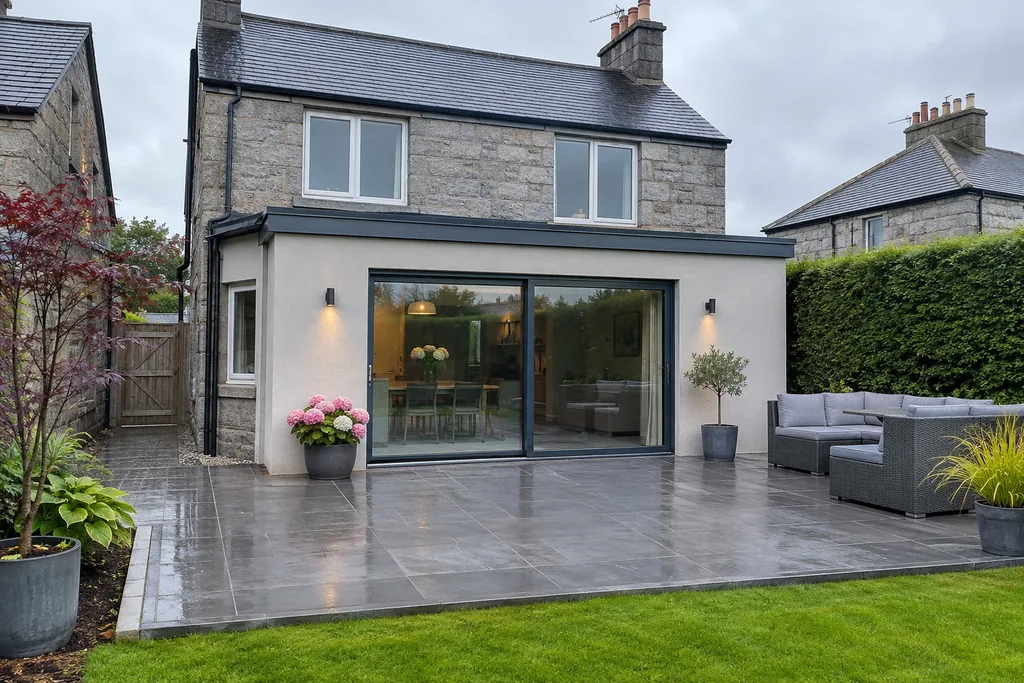
Porcelain paving
in Aberdeen
Smooth, tough slabs that dry fast and wipe clean in a wet climate.
- Dense slabs that take frost well
- Shrugs off moss, salt and spills
- Phone us, or use the short form
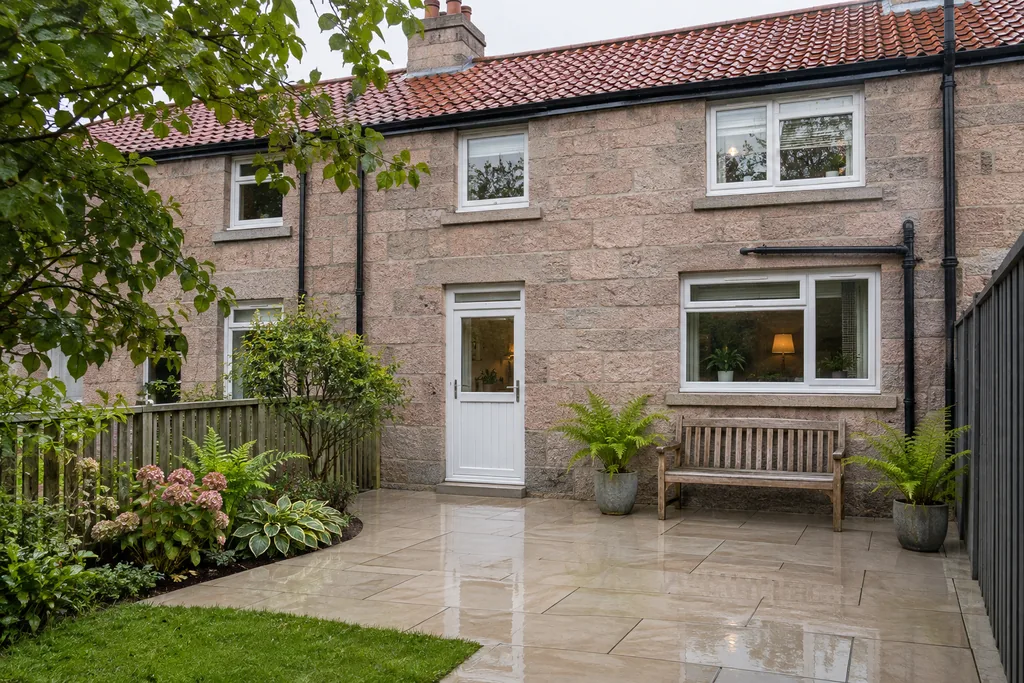
Why porcelain suits a wet coast
Porcelain is fired at very high heat, so the slab is dense and takes in almost no water. Frost has little moisture to freeze inside it, and moss finds it harder to grip. After a wet winter it dries fast and cleans with a brush.
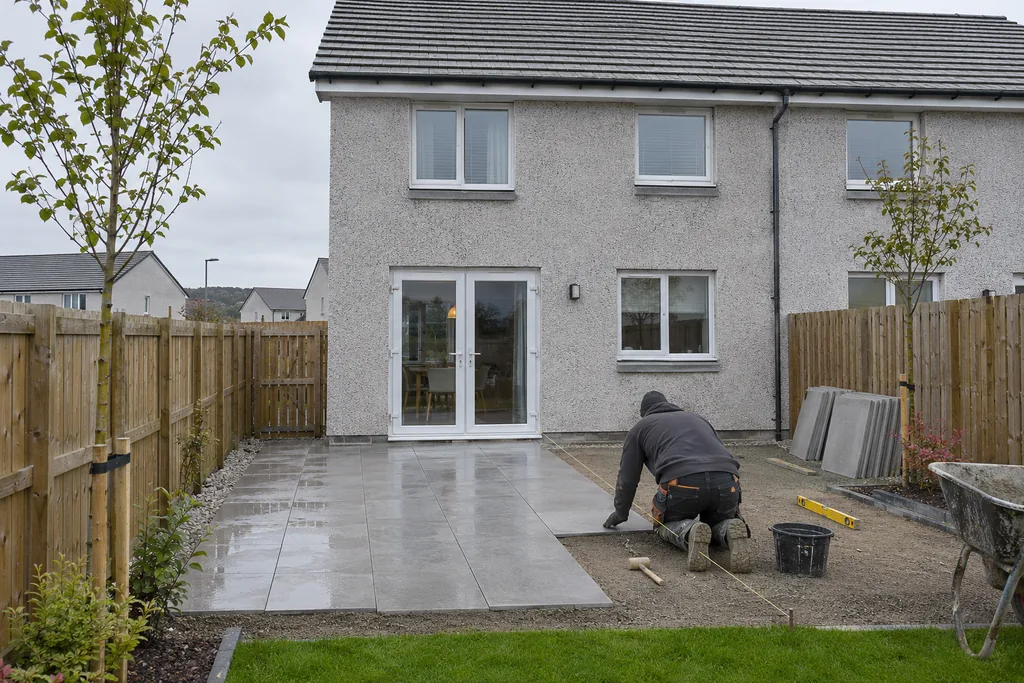
Laying it properly
Large, thin slabs are less forgiving than old-fashioned paving. The base has to be flat and hard, because there is little thickness to hide a dip. Slabs are bedded with care, jointed neatly and cut with a diamond blade, so the pattern runs straight and the edges are clean.
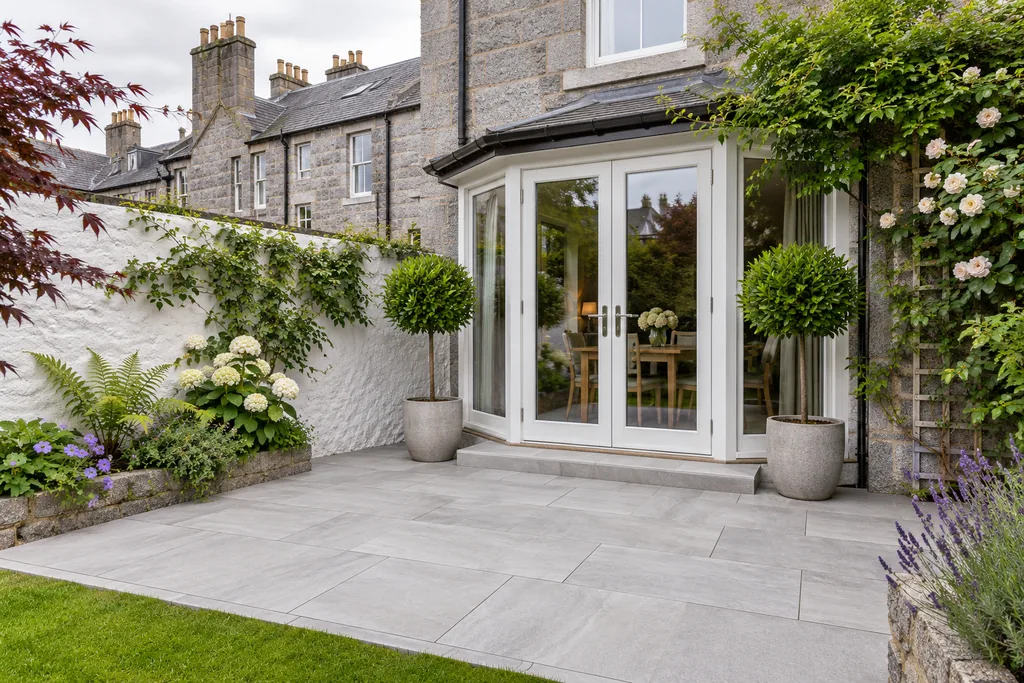
Where it works, and where something else may suit
Porcelain is a good fit for a modern extension, a small town garden, a shaded corner or a terrace beside a living room. Against a granite villa with a weathered wall it can look out of place, and sandstone or granite often looks better. Compare them on the styles page.
Pale and mid greys feel clean in grey weather, while very dark slabs show dust and salt. Choose a textured face for a path or steps, so it grips in wet and frost.
Porcelain paving questions
Is porcelain slippery in the rain?
It can be if the face is smooth. We would pick an outdoor-rated, textured finish, especially for steps and paths.
Will porcelain survive Aberdeen frost?
Yes. Outdoor porcelain absorbs very little water. Ask the maker for the frost rating of the exact slab.
Does porcelain stain?
It resists most marks. Sweep it, rinse it and treat oil or wine spills quickly.
Is porcelain more expensive than sandstone or blocks?
Prices vary by range and size. We give you a written figure on your own job, not a guide here. See paving costs.
Can porcelain go on a patio, a path and steps?
Yes, with the right finish and a flat base for each.
How do I get a porcelain quote?
Ring 01224 927157, or use the form.