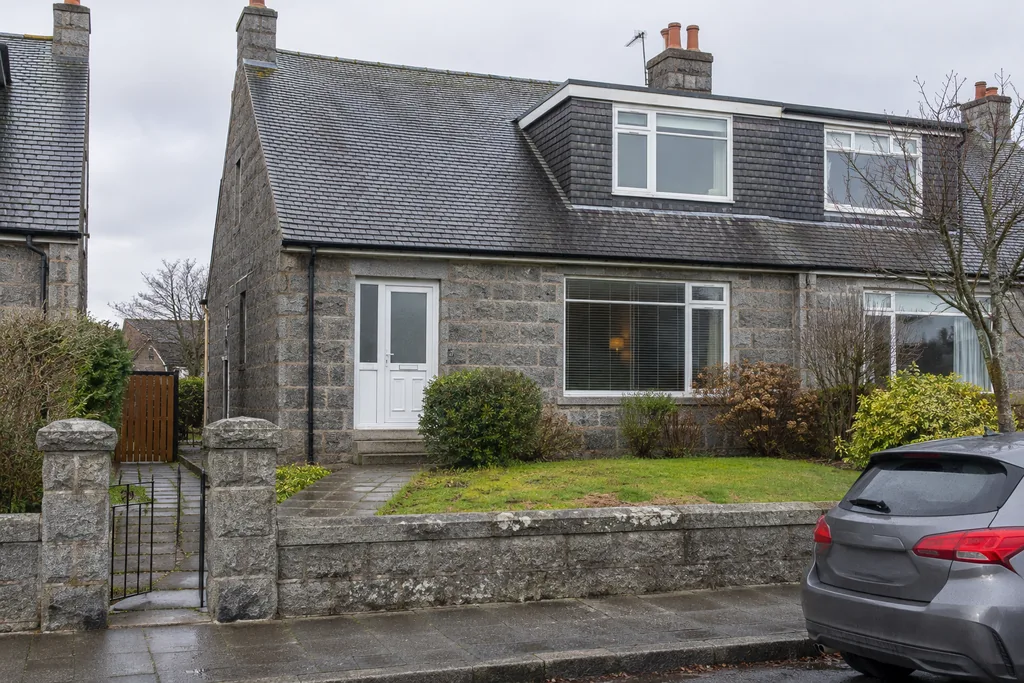
Does your garden have room?
A parked car needs to fit wholly inside your boundary, with room left to open the doors. If the front garden is shorter than the car, the bumper hangs over the pavement, which is a problem for walkers and for the council. Measure from the house wall or bay window to the pavement edge, then measure the gap between boundary walls.
Also look at where you will turn. Reversing out across a pavement on a busy street is a risk. A wider plot may allow a turning area. A narrow one may only suit a parking space with a gate. If you only need room for a small car, a smaller scheme may fit with a path beside it.
Then think about what you give up. A front lawn soaks up rain and gives the street some green. If you can keep a border, a hedge or a planting strip, do so. It helps with water, and it keeps the look of the street.
Consent and the dropped kerb
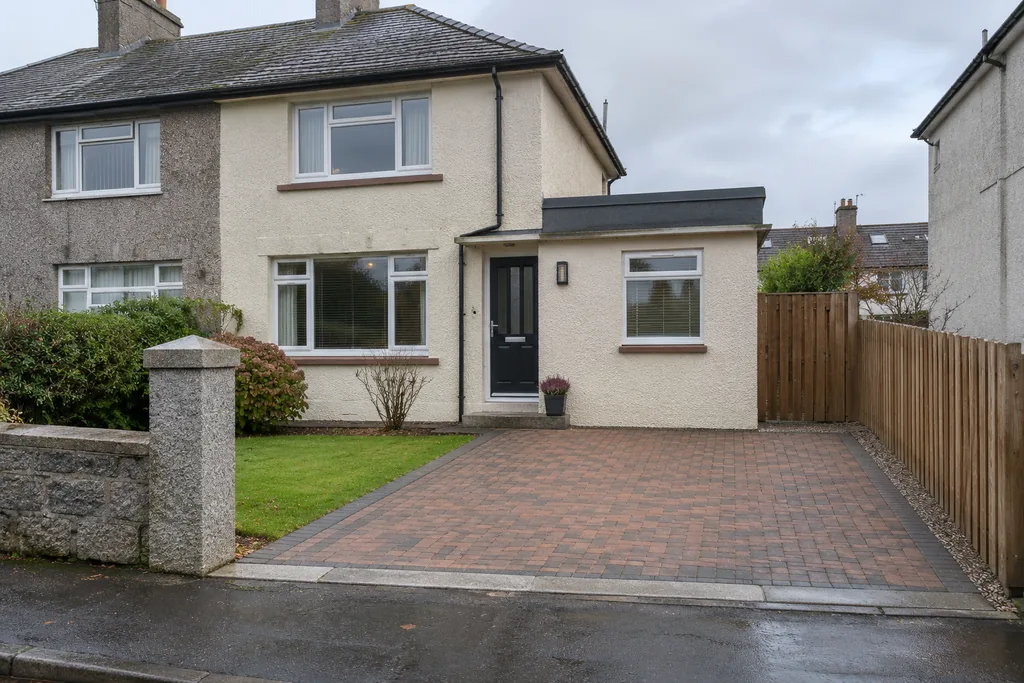
If the car will cross the pavement, the kerb has to be lowered, and only the council's roads team can agree that. Aberdeen City Council's page says you need permission to install a dropped kerb or driveway (council page, seen 24 November 2026). It was not possible to open the page from our machine, so check its fee and its regulations yourself.
Aberdeenshire Council's page is clearer. You apply to your local roads office and pay a non-refundable fee, which covers the first inspection. You then pay for the work. Surface water must not run from your site on to the road, and the access must be paved for 5 metres back from the road edge. If the road is classified, you also need planning permission. If it is unclassified, you do not (council dropped kerbs page, read 24 November 2026, no update date shown).
Consent is separate from the paving itself. Do not book the paving before you know the council's answer. The Scottish Government guidance is worth reading as well. It notes that a surface between house and road, or any surface in a conservation area, generally needs permission.
Water: where the rain goes
Water is the quiet rule in all of this. The Government's guidance asks for front surfaces to let water soak in or to run on to your own lawn or border, so the road does not flood (mygov.scot, updated 18 November 2025). Aberdeenshire says the same in its own words.
There are two ways to do it. One is permeable block paving, which lets rain through the joints into a stone layer below. The other is to lay normal blocks to a fall that leads water into a planted border or a soakaway on your own ground. A drive that tips water toward the pavement is the one that gets complaints.
What goes down
Whichever surface you choose, the build is the same in outline.
- The lawn and soft soil come out, down to firm ground.
- A base of hard stone goes in, laid in layers and pressed down. A car needs a deeper base than a path.
- Edge restraints are fixed along both sides, so the blocks cannot spread.
- A thin layer of grit sand is levelled on top.
- Blocks are laid, cut to fit and pressed down.
- Sand is swept into the joints, and the surface is pressed again.
Most sunken drives skipped step 1 or 2. They look fine for a season, then a wheel track appears. See how a job runs for the long version.
Blocks, pattern and colour
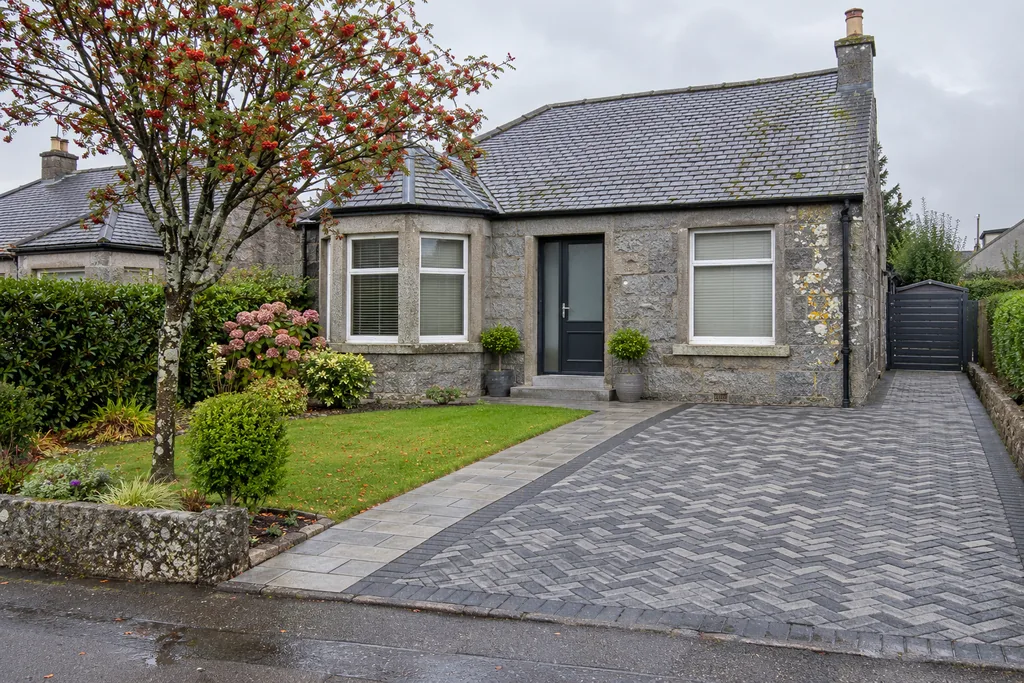
Herringbone is the strongest pattern for cars, because the blocks lock in different directions. A running bond works for a path. Charcoal and grey hide oil and tyre marks best. A lighter border or a row of setts along the edge can echo the granite wall beside it.
Think about the whole street too. A very bright block next to a granite terrace can jar. Our block paving page has more on the main types, and the paving styles page shows colour combinations.
Walls, gates and trees
Boundary walls in Aberdeen are often granite and often old. A heavy digger next to a wall can disturb it. We dig carefully near them, and we keep the base clear of the wall footing. If you need to take part of a wall down for a wider entrance, check whether your house is in a conservation area. The council may care about the wall as much as the paving.
Tree roots are another snag. Digging through them can hurt the tree and leave the base lumpy. If a protected tree is nearby, ask the council before any work (Aberdeenshire page, read 24 November 2026).
Questions to ask a contractor
- Who applies for the dropped kerb, and when?
- What depth of stone sits under the blocks?
- Where will the rain go?
- How will the edges be held?
- What happens to the lawn, the soil and the old wall stone?
- When can I park on it afterwards?
Short, exact replies are what you want. A vague one is a reason to ask again before you sign.
Questions
Do I always need a dropped kerb?
If you cross the pavement with a car, yes. Ask your council.
Can the council refuse?
Yes. Aberdeen City Council committee papers show refusals and appeals, so apply before you book the paving.
How does block paving compare with tarmac or concrete?
They behave differently. Blocks can be lifted to repair pipes and they can drain through the joints. We lay paving only, not tarmac.
Can I keep a lawn too?
Often. A border or planted strip helps with water and keeps the look of the street.
Where do I start?
Ring 01224 927157 and tell us your postcode and the size of the plot.